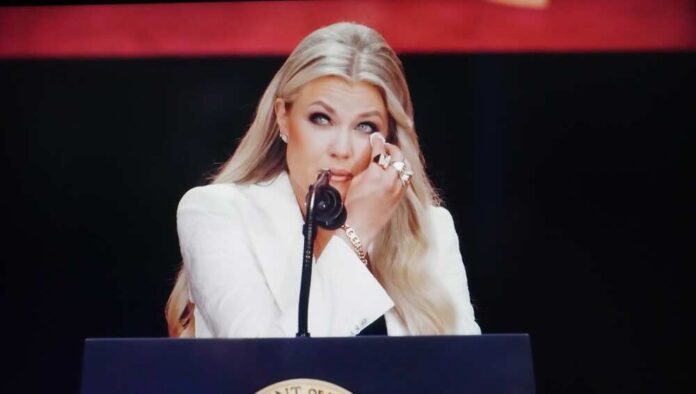
Erika Kirk, widow of Charlie Kirk, rejects an apology from Jimmy Kimmel over incendiary remarks following her husband’s assassination.
Story Highlights
- Erika Kirk refuses Jimmy Kimmel’s apology over remarks about her husband’s assassination.
- Sinclair Broadcast Group approached Erika Kirk about a potential Kimmel on-air apology.
- Sinclair and Nexstar pulled Kimmel’s show, prompting Disney to suspend him.
- Kimmel issued a lukewarm apology, avoiding the word “sorry,” after reinstatement.
Erika Kirk’s Bold Stand Against Apology
In a striking statement, Erika Kirk, widow of the late Charlie Kirk, declared she does not seek an apology from Jimmy Kimmel. This follows Kimmel’s controversial comments linking Kirk’s assassination to the “MAGA gang.”
Erika made it clear that an insincere apology would not suffice, emphasizing that she neither wants nor needs it. This sentiment resonated with many who value authenticity over performative gestures.
Sinclair Broadcast Group, a major media entity, approached Erika Kirk to facilitate her appearance on Jimmy Kimmel’s show for a possible apology.
Sinclair, alongside Nexstar, took a firm stance by pulling Kimmel’s show from their networks, pressuring Disney to suspend the host. This decisive action underscores the media giant’s commitment to maintaining decorum over sensationalism.
Jesse Watters: “Jimmy Kimmel lied about your husband’s mu*der and didn’t really apologize. What would you say to Jimmy Kimmel?”
Erika Kirk: “The same thing I told Sinclair [Broadcast Group]… They asked, ‘Do you want Jimmy Kimmel to give you an apology? Do you want to be on his… pic.twitter.com/WmRMSwJV6D
— RedWave Press (@RedWave_Press) November 4, 2025
The Media’s Role in Political Tensions
The controversy around Jimmy Kimmel’s comments highlights the media’s powerful role in shaping public discourse. Kimmel’s remarks, seen as divisive by many, prompted Disney to act, citing the need to avoid further inflaming an already tense situation.
This incident reflects the ongoing tension between media outlets and their responsibility in mitigating political violence.
Kimmel’s subsequent apology, notably lacking the word “sorry,” failed to address the core issue for many conservative viewers.
This response has sparked further debate about the sincerity and impact of public apologies, especially from influential media personalities. For some, the apology seemed a mere formality rather than a genuine attempt at reconciliation.
Rising Concerns Over Political Violence
Charlie Kirk’s assassination has sent shockwaves across the nation, highlighting the growing concerns about political violence. The arrest of Tyler Robinson, charged with aggravated murder, has intensified discussions around the motivations behind such acts.
As the country grapples with these issues, the focus remains on ensuring justice and preventing further violence.
As Erika Kirk continues to navigate this challenging time, her resolve in rejecting superficial gestures stands as a testament to the importance of genuine dialogue and action. Her story serves as a poignant reminder of the need for authenticity in addressing the deep-seated divisions within the nation.