

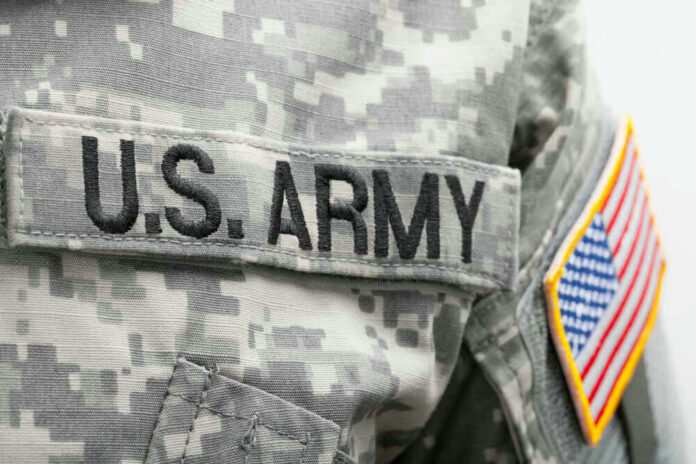
The U.S. Army just eliminated training programs soldiers once considered essential for survival in combat, betting that commanders can pick and choose what matters when bullets start flying.
Story Snapshot
- Army slashed 350 hours of mandatory annual training in 2024, with additional cuts eliminating resilience training and making survival courses optional by June 2025
- Budget shortfalls forced curtailment of training for 80% of ground forces during 2013 sequestration crisis, establishing pattern repeated today
- New regulations reduce training requirements from 250+ pages to 132, shifting responsibility from standardized protocols to individual commander discretion
- Combat Lifesaver Training, Law of War instruction, and Code of Conduct courses now optional despite addressing life-threatening battlefield scenarios
When Budget Reality Meets Battlefield Necessity
The Army faces an impossible equation. Congress controls the checkbook, but soldiers bleed when training falls short. The 2013 sequestration crisis delivered the blueprint: protect deployed forces first, sacrifice everything else second.
Maj. Gen. Jeffrey Snow announced training cuts for approximately 80% of ground forces that year, canceling nearly all brigade-level training center rotations for non-deployed units.
The Army planned furloughs for over 250,000 civilian employees and faced an $18 billion shortfall. Equipment reset from Iraq and Afghanistan ground to a halt at Army depots.
The Army is grappling with a sudden budget crunch and scrambling to slash training costs across broad swaths of the force, according to internal documents reviewed by @ABC News and multiple U.S. officials. https://t.co/YynsS9KJIo
— ABC News (@ABC) May 13, 2026
Fast forward to 2025, and the script hasn’t changed, just the marketing. Gen. Randy George became Chief of Staff in September 2023 with a clear priority: slash mandatory training requirements. He frames it as “streamlining” rather than crisis management, but the result is the same.
The Army cut roughly 350 hours of annual mandatory online training in 2024, then went further in April 2025 by eliminating two mandatory programs entirely and making six others optional. The new AR 350-1 regulation took effect June 1, 2025, shrinking from over 250 pages to 132.
What Soldiers No Longer Have to Learn
Resilience Training was removed entirely, labeled “outdated” by Army leadership. Structured Self-Development programs disappeared alongside it.
The optional list reads like a greatest hits of battlefield survival skills: Chemical, Biological, Radiological and Nuclear training for anyone not specifically assigned to CBRN units. Combat Lifesaver Training, which teaches soldiers to keep their buddies alive until medics arrive.
Safety and occupational health courses. Law of War training that explains the rules of engagement and the Geneva Conventions. Code of Conduct instruction for prisoners of war scenarios. Online Personnel Recovery and SERE courses that teach survival, evasion, resistance, and escape.
The Army maintains that 17 core mandatory training requirements remain, and commanders now possess “greater flexibility in customizing training schedules to meet specific mission requirements.”
Translation: individual unit leaders decide whether their soldiers need to know how to treat a sucking chest wound or understand the legal boundaries of combat operations.
Some commanders will prioritize these skills. Others won’t. American soldiers will deploy with drastically different levels of preparation, depending on who signs their training schedule.
Hollowing out the force. Army cuts training as service is short billions of dollars https://t.co/LnlitFUV5L
— BrutusThePupper (@jhcBrutus) May 13, 2026
The Recurring Pattern Nobody Wants to Acknowledge
This isn’t new territory. During the 2013 crisis, military leadership warned Congress of “grave consequences and immediate impact on the readiness of our remaining forces.”
The Budget Control Act of 2011 triggered automatic cuts of $47 billion in defense spending when Congress couldn’t reach a deficit reduction agreement.
Every service branch took hits. Marine Corps tactical units fell below acceptable readiness levels, with projections indicating more than 50% would be substandard by 2014.
The Air Force cut training for two-thirds of combat units, rendering most non-mission-capable by July 2013. The Navy hemorrhaged $600 million in February 2013 alone.
The Army absorbed the deepest wounds because ground forces offered the most flexibility for cuts. Planning called for reducing the force by 88,000 between 2013 and 2017, with projections showing potential losses exceeding 100,000 additional troops if sequestration continued.
Brigade combat teams faced a 40% reduction. Aviation, intelligence, and engineering specialties took body blows. Recruitment activities scaled back. The pattern established then repeats now: training represents the easiest target because the consequences don’t appear immediately on balance sheets.
The Commander Discretion Gamble
Shifting training decisions to unit commanders sounds reasonable until you consider the pressure these leaders face. They juggle deployment schedules, equipment maintenance, personnel issues, and operational tempo demands.
Now add responsibility for determining whether their soldiers need training that was previously considered mandatory across the entire force.
Some commanders bring extensive combat experience and wisdom about what actually matters downrange. Others lack that background, particularly in an Army struggling with retention and promotion challenges.
This decentralization creates a nightmare for readiness assessment. How does Army leadership measure actual preparedness when training standards vary by unit? What happens when a soldier transfers from a unit where the commander prioritized Combat Lifesaver Training to one where it wasn’t conducted? Does that soldier’s medical readiness status change based on geographic reassignment?
The old system had flaws, but standardization meant predictable baseline capabilities. The new model trades consistency for flexibility, assuming commanders make correct choices under resource constraints.
Educational Programs Quietly Disappear
While training regulation changes grabbed headlines, May 2025 brought quieter cuts that signal deeper problems. Two educational programs for troops were eliminated entirely as part of Pentagon cost-cutting efforts. The Army hasn’t publicized which programs or explained the rationale.
Educational benefits traditionally serve as recruitment and retention tools, helping soldiers build skills for military and civilian careers. Cutting these programs saves money immediately but damages the value proposition for potential recruits and current service members considering reenlistment.
The cumulative effect matters more than individual cuts. Reduced training hours, combined with the elimination of educational programs and optional survival courses, paint a picture of an institution forced to hollow itself from within.
The Army describes itself as “significantly over-structured” with insufficient soldiers to fill existing units. Chronic recruiting shortfalls compound the problem. You can’t maintain combat effectiveness with too few soldiers receiving inconsistent training while educational opportunities evaporate.
What History Teaches About Training Shortcuts
Military history delivers brutal lessons about the cost of inadequate preparation. Units sent into combat without proper training generate higher casualty rates, lower mission success rates, and greater long-term costs from medical care and disability compensation. The 2013 cuts occurred while combat operations continued in Afghanistan.
The Army protected deployed forces then but sacrificed preparation for units scheduled for future deployments. That decision created predictable readiness gaps that took years to close.
The current cuts follow the same logic but with a different framing. Army leadership claims these changes will ensure soldiers are “better prepared for real-world missions while reducing nonessential requirements that can detract from operational effectiveness.” That statement assumes the eliminated and optional training categories actually detract from effectiveness rather than contribute to it.
Combat veterans might question whether resilience training, survival courses, and medical skills qualify as nonessential. The soldiers who needed those skills and didn’t have them can’t offer testimony.
The Political Calculation Behind Military Readiness
Congress holds appropriations authority but relies on military leadership for readiness assessments, creating tension between fiscal constraints and capability requirements. Members of Congress from districts with military installations face pressure from constituents to protect local jobs and spending.
Those representing areas without a significant military presence are more easily inclined to support defense budget cuts. The result is a political process that treats military readiness as a negotiable variable rather than a strategic constant.
The Budget Control Act sequestration demonstrated what happens when Congress can’t reach deficit reduction agreements. Automatic cuts don’t discriminate between essential and wasteful spending. They slash across the board, forcing military leaders to implement reductions they oppose while publicly supporting civilian leadership.
The dynamic repeats because the underlying problem persists: America wants robust military capabilities without committing the resources necessary to maintain them. Training gets cut because the consequences don’t appear until soldiers deploy into combat situations they weren’t prepared to handle.
Measuring the True Cost
Budget savings from training cuts show up immediately in accounting ledgers. The actual costs emerge over the years as force capability degrades, casualty rates increase, and recruitment challenges intensify. Soldiers talk to each other and to potential recruits. Word spreads when training quality declines, when educational programs disappear, when the Army can’t deliver on promises made during recruitment.
The volunteer force model depends on maintaining service attractiveness relative to civilian opportunities. Cutting training and education while expecting recruiting success defies logic.
The long-term institutional effects extend beyond current readiness. Soldiers trained under reduced requirements will become the next generation of sergeants and officers.
Their knowledge gaps and training philosophy will shape how they prepare future soldiers. Once you establish that survival courses, medical training, and ethics instruction are optional rather than mandatory, you’ve fundamentally altered professional standards.
Reversing that cultural shift requires more than restoring budget lines. It demands rebuilding consensus about what soldiers must know before they deploy into harm’s way.
Sources:
Army bracing for massive cuts – The American Legion
Chiefs to Congress: Fiscal crisis threatens US military edge – National Guard
Army soldiers training courses – Stars and Stripes
2 educational programs for troops eliminated amid cost-cutting efforts – Military.com