American families now work the equivalent of 11.5 hours at minimum wage each month just to pay their water and sewer bills—and that number keeps climbing with no end in sight.
Story Snapshot
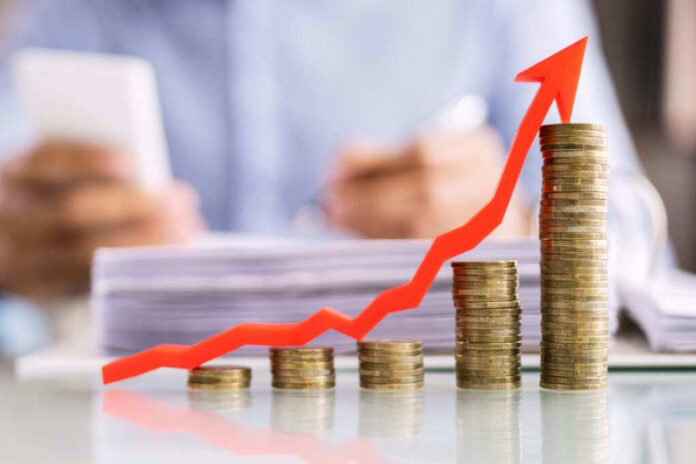
- Water and sewer bills jumped 5.1% in 2025, hitting a five-year peak and outpacing general inflation for the 25th consecutive year
- Since 2000, utility costs have surged 207% while overall inflation rose just 93%, more than doubling the rate of price increases Americans face elsewhere
- Cities like Baltimore face 22% chemical cost increases while Oklahoma City battles 85% electricity spikes, forcing utilities to pass expenses directly to households
- The Bipartisan Infrastructure Law’s $30 billion in water funding expires in 2026, leaving utilities scrambling as century-old pipes continue deteriorating
- Low-income families shoulder the heaviest burden, spending a higher percentage of income on water even as wealthier households pay more in absolute dollars
The Relentless March Upward Shows No Signs of Stopping
Bluefield Research’s annual tracking of 50 major U.S. cities shows that water bills climbed 6.0% and sewer charges rose 4.8% in 2025. The combined 5.1% increase marks the sharpest annual jump in five years, driven by what Bluefield analyst Megan Bondar calls utilities’ “own inflationary pressures.”
Since 2020 alone, households have absorbed a cumulative 24.2% increase in water and wastewater costs. Bondar sees no indication the upward trajectory will change, pointing to aging infrastructure and tightening regulations as twin forces squeezing municipal budgets and ratepayer wallets alike.
Water costs are rising faster than inflation — and sending bills soaring https://t.co/iCJGRtD5j6
— Leroy James Essel (@EsselLeroy) May 13, 2026
Century-Old Pipes Meet Modern Price Tags
Much of America’s water infrastructure was installed during the early 1900s, and those systems are now failing under the weight of a century’s use.
The Natural Resources Defense Council’s Erik Olson describes these networks as “ancient,” requiring major investment to prevent leaks, contamination, and service disruptions. Deferred maintenance compounded by population growth and urbanization has created a perfect storm.
The 2021 Bipartisan Infrastructure Law injected over $30 billion into water systems, but that funding ends in 2026. Without renewal, the backlog of repairs and upgrades will only deepen, ensuring continued rate increases as utilities pursue compliance with Environmental Protection Agency mandates on contaminants such as PFAS.
Operating Costs Spiral Beyond Control
Utilities face their own inflation crisis that dwarfs what consumers see at the grocery store. Oklahoma City’s water department grapples with an 85% surge in electricity costs, while Baltimore confronts treatment chemical expenses up 22%. Houston has begun tying rate adjustments directly to inflation indexes, acknowledging the futility of absorbing these shocks internally.
The pandemic accelerated supply chain disruptions that drove chemical and energy prices skyward, and the 2024 drought—peaking in the third quarter—strained Midwest supplies further.
Bank of America Institute economist Taylor Bowley identifies climate impacts and infrastructure needs as a double cost driver, with the Midwest now the epicenter of bill increases.
Regional Disparities Reveal Uneven Burdens
Geography determines how much pain households feel. The Northeast and West average $147 and $143 per month for combined water and sewer service, respectively, while the Midwest experiences the fastest growth due to compounding infrastructure decay and weather extremes.
Los Angeles County exemplifies the long-term trend, with bills up 60% over the past decade, according to UCLA’s Luskin Center researchers Edith de Guzman and Gregory Pierce.
Mid-Atlantic states, including New York, New Jersey, and Pennsylvania, see surges exceeding national inflation benchmarks. These regional variations reflect different infrastructure ages, regulatory environments, and local utility management philosophies, but all point in the same expensive direction.
The equity dimension cuts deeper than raw dollar amounts suggest. While higher-income households and large-property owners pay more in absolute terms, low- and middle-income families spend a greater share of income on water access.
De Guzman warns that rates outpacing inflation threaten what she calls the “human right to water,” potentially pricing vulnerable populations out of essential services.
Rural areas face particular jeopardy, where smaller customer bases must fund proportionally larger infrastructure investments. UCLA’s research shows this affordability crisis will likely persist for two decades as utilities work through mandated upgrades and new contaminant regulations that expand treatment requirements and costs.
The Path Forward Offers Few Easy Solutions
Experts across industry, academia, and advocacy groups agree on the diagnosis but diverge on remedies. Bluefield Research emphasizes that maintenance and modernization expenses will continue to drive rates upward regardless of broader economic conditions.
The NRDC argues that only sustained federal investment can address the scale of need, yet the expiring infrastructure law demonstrates the limits of political will for water spending.
Some utilities explore water reuse technologies and efficiency improvements, but these require substantial capital investments that ultimately flow back to ratepayers.
The uncomfortable truth is that decades of underinvestment have created a bill coming due—one that American households will pay in monthly installments for years to come, faster than inflation and with no relief on the horizon.
Water costs are rising faster than inflation — and sending bills soaring
The cost of water and related services is rising twice as fast as inflation while utilities scramble to cope with escalating droughts and more intense storms.https://t.co/6aCBvYeCFL
— WATER SYSTEM NEWS 💧💩 (@WaterSystemNews) May 13, 2026
The consensus among researchers is sobering. Water and sewer costs will continue to outpace general inflation as the structural forces—century-old infrastructure, regulatory mandates, climate pressures, and inflation in operating expenses—show no signs of abating.
Households should brace for this new normal, in which accessing clean water and disposing of wastewater consume an ever-larger share of family budgets. At the same time, utilities struggle to balance affordability against the imperative of safe, reliable service.
Sources:
Why water bills have been rising at twice the rate of inflation
L.A. County Water Bills Rising Faster Than Inflation, UCLA Luskin Center for Innovation Finds
Study Shows Increasing Cost of Water