Criminal syndicates in Southeast Asia have quietly built a tech-powered shadow economy so large it now rivals — and in some places may exceed — the formal economies of the countries that host it.
Story Snapshot
- Cyber scam centers across the Mekong now earn tens of billions of dollars a year.
- Artificial intelligence, deepfakes, and encrypted apps let gangs target victims worldwide at scale.
- Hundreds of thousands of trafficked workers are forced to run these scams inside guarded compounds.
- Profits wash through cryptocurrency and banks, blurring the line between criminal and “normal” finance.
How a regional scam problem became a global shadow economy
The United Nations Office on Drugs and Crime reports that cyber-enabled fraud in the Mekong region alone now generates between $27.4 billion and $36.5 billion in annual profits. Other serious studies put worldwide losses from these syndicates closer to $64 billion or more, with some estimates going even higher.
These are not back-room hustles. They form an industrial-scale economy, supported by purpose-built scam centers, corrupt local elites, and sophisticated financial channels that reach into major banking systems worldwide.
International criminal groups use technology to expand in and beyond Asia, UN report says https://t.co/FVKY31fYei pic.twitter.com/PrGqaKYcsM
— The Independent (@Independent) July 21, 2026
United Nations analysts describe the Mekong corridor—Cambodia, Laos, Myanmar, and neighboring states—as the main hub of this new criminal market.
Once, these borderlands were known for drugs and illegal gambling. Over the last few years, abandoned casinos and hotels turned into cyber scam compounds.
Workers sit in rows of computers, running romance scams, investment frauds, and voice-phishing operations that target victims from East Asia to North America. The goal is simple: move as much money as possible, as fast as possible, with as little risk as possible.
Technology turned old scams into global factories
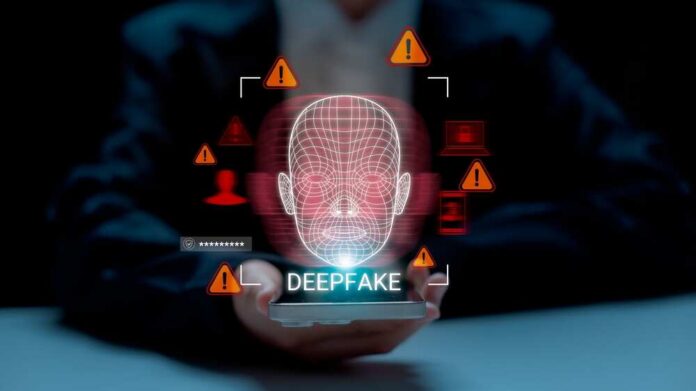
Crime groups use artificial intelligence tools, deepfake video, cloned voice calls, and instant translation systems to hit thousands of victims at once in multiple languages. Scammers now sound like your bank, your boss, or your child because software can copy any accent and face.
Generative text systems write convincing phishing messages tailored to different cultures in seconds. This blend of cheap computing power and criminal intent has “supercharged illicit economies” in Southeast Asia, according to United Nations officials.
Encrypted messaging platforms are the backbone of this machine. United Nations reporting says criminal networks across Southeast Asia rely heavily on Telegram because it scales to huge audiences and offers layers of privacy similar to the dark web.
Telegram channels host fake job ads to recruit workers into scam centers, handle victim communications, and run internal criminal marketplaces that sell stolen data and money-mule accounts. For law enforcement, this is a nightmare combination: cross-border reach, anonymous accounts, and data stored outside their legal grasp.
The human cost: cybercrime built on modern slavery
The technology is cold and slick; the human story behind it is brutal. A recent United Nations human rights report estimates that at least 300,000 people are working inside scam operations across Southeast Asia, many under conditions that meet the definition of trafficking and forced labor.
In Myanmar and Cambodia alone, more than 200,000 individuals were forced to work in scam centers over the previous year. Survivors speak of torture, food and sleep deprivation, and shifts that stretch up to nineteen hours a day.
UN: Online scammers in the Asia-Pacific region earned up to $114 billion
Organized criminal networks have turned online fraud into one of the largest illegal industries in the Asia-Pacific region. Last year, victims of fraudulent schemes in East and Southeast Asia, Australia,… pic.twitter.com/nbBAcRF8px
— Mossad Customer Support (@LionOfJudahX) July 21, 2026
Many victims answered online ads for normal jobs—customer service, tourism, tech support—and were then moved across borders, stripped of passports, and locked inside guarded compounds. Once trapped, they were ordered to scam strangers or face beatings, electric shocks, or sexual assault. This is not just “online fraud.”
It is one of the largest coordinated trafficking operations ever recorded, according to United Nations reporting, and it blends white-collar crime with old-fashioned brutality in ways that should alarm anyone who cares about human rights and rule of law.
Follow the money: from USDT wallets to global banks
Behind every fake romance text sits a money pipeline. United Nations and research center studies describe how these groups rely on cryptocurrency, especially dollar-linked tokens such as Tether, and on underground banking systems to wash funds.
Once stolen, money moves through high-risk virtual asset service providers—often thinly regulated exchanges—and then into more respectable banks where it becomes almost impossible to trace.
Casinos and online gambling platforms in Special Economic Zones help blend dirty money with legitimate-looking cash flows.
In Cambodia, one estimate suggests that cyber scamming may generate more than $12.5 billion in returns each year—nearly half of the country’s formal gross domestic product. That figure comes from labor-force counts and per-worker scam targets, not from official audits, but even skeptics admit the numbers are huge.
When criminal profit starts to match national output, governance itself is at risk. Local officials face strong pressure to look away, and some are likely paid to do exactly that.
Power, corruption, and why this keeps spreading
United Nations reporting warns that scam compounds are now dispersing from well-known Special Economic Zones into more remote areas with even weaker governance. As authorities crack down in one location, groups simply move their operations across borders or deeper into borderlands.
Corruption is a “critical factor” that lets these scam factories operate in plain sight. In some cases, political ties between crime bosses and national leaders create obvious conflicts of interest, making serious enforcement unlikely.
Foreign crime syndicates are hijacking new technology to loot citizens around the world, then hiding behind weak states, cozy political relationships, and encrypted platforms.
Yet there is almost no organized counter-argument to the core facts laid out by the United Nations and major research bodies. No one has produced strong evidence that these profit or victim estimates are wildly wrong, and that silence speaks volumes.
What it means for ordinary citizens and policymakers
The stakes reach far beyond Asia. Money stolen in Phnom Penh might leave an American couple bankrupt or wipe out a retiree’s savings in Europe. At scale, this drains trust from digital finance and gives hostile actors leverage over weak governments.
Effective response will require tighter rules on cryptocurrency exchanges, real pressure on platforms like Telegram to curb criminal use, and honest audits in countries where scam profits now prop up parts of the local economy.
Most of all, it demands clear moral lines. A country cannot claim to uphold human rights while allowing thousands of trafficked workers to be beaten into running scams that rob families worldwide.
Nor can free societies ignore criminal networks that use cutting-edge technology to turn fraud and slavery into a booming export industry. The evidence is already on the table.
Sources:
abcnews.com, ny1.com, news.un.org, unodc.org, static.poder360.com.br, voanews.com, business-humanrights.org, x.com, thedailystar.net, thediplomat.com, youtube.com, facebook.com, uscc.gov