
Hillary Clinton’s surprise vow to nominate Donald Trump for the Nobel Peace Prize—if he forges a peace in Ukraine without conceding to Russia—has ignited a political firestorm and revealed the high-stakes expectations facing Trump’s presidency.
Story Snapshot
- Hillary Clinton publicly promises to nominate Trump for the Nobel Peace Prize if he delivers a Ukraine peace deal that preserves Ukraine’s territory.
- Trump and Putin meet in Anchorage, Alaska, as the world watches for a breakthrough in the Russia-Ukraine war.
- Clinton’s rare bipartisan statement sets a high bar, highlighting deep skepticism of Russia’s intentions and Trump’s diplomatic challenge.
- The outcome could reshape U.S. politics, European security, and Trump’s legacy as a dealmaker.
Clinton’s Conditional Endorsement: A Political Earthquake
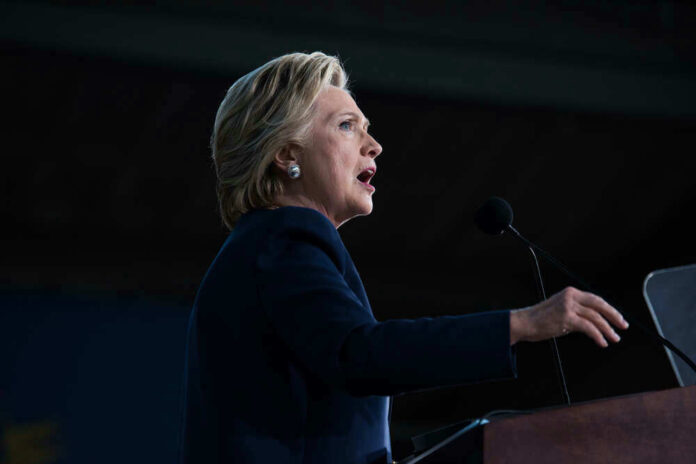
On August 15, 2025, Hillary Clinton stunned both sides of the political aisle by announcing, on the “Raging Moderates” podcast, that she would endorse a Nobel Peace Prize nomination for President Donald Trump—if and only if he secures a peace agreement in Ukraine that does not require the country to give up any land to Russia. Clinton’s public challenge to her longtime rival arrives just as Trump is set to meet Russian President Vladimir Putin in Anchorage, Alaska, for high-stakes talks aimed at ending the three-year Russia-Ukraine war. The move is rare in its bipartisan tone, but Clinton’s conditions signal a deep distrust of Russian motives and a demand for a deal that upholds Western-backed principles of sovereignty.
Clinton’s comments reflect a broader political calculation. She asserts that any peace deal rewarding Russian aggression is unacceptable, underscoring the symbolic weight of the Nobel Prize in global diplomacy. The timing of her statement—on the day of Trump’s summit—places even greater scrutiny on the negotiations, with the world watching to see if Trump, long criticized for his approach to foreign adversaries, can deliver results without undermining Ukraine’s territorial integrity. While Clinton positions herself as holding the moral high ground, her remarks also serve as a public test of Trump’s promise to put “America First” while securing real results abroad.
Trump-Putin Summit: A Defining Test of American Leadership
Trump’s meeting with Putin in Alaska is not just a diplomatic event—it’s a defining moment for American leadership and credibility. The war in Ukraine, which began with Russia’s invasion in 2022, has cost countless lives, displaced millions, and destabilized global markets. Trump’s critics have previously accused him of being soft on Russia, but he arrives at the summit with strong leverage: his new administration’s aggressive border and security policies, a focus on rebuilding American strength, and a mandate to cut through endless international bureaucracy. Trump’s optimism, publicly stating a “75% chance” of brokering a deal, feeds hopes among war-weary Americans and Europeans alike that a decisive end to the conflict is within reach.
Yet, the stakes are enormous. A deal that fails to restore Ukraine’s full sovereignty risks splintering Western alliances and emboldening adversaries. If Trump succeeds, he could reshape the security order in Europe, boost U.S. prestige, and silence critics who doubted his approach to global diplomacy. If not, skepticism of both Russian intentions and Trump’s style will only deepen, further dividing a nation already frustrated by years of leftist policies, unchecked spending, and perceived international weakness.
The Nobel Prize as a Conservative Litmus Test
Clinton’s invocation of the Nobel Peace Prize is more than symbolic. For many conservatives, the Nobel has long been a point of contention—especially after President Obama received it in 2009 for intentions rather than results. Trump has previously sought Nobel recognition for the Abraham Accords, which brought historic normalization agreements in the Middle East. Now, with Clinton publicly acknowledging the possibility, the prize becomes a benchmark for genuine achievement—provided Trump resists the pressure to compromise core values or give in to globalist demands. Clinton’s challenge reframes the debate: this is not about appeasement, but about upholding national sovereignty and real peace through strength, not capitulation.
For Trump’s conservative supporters, this moment is vindication—a chance to prove that American resolve, not bureaucratic appeasement or endless foreign spending, can drive results. Clinton’s statement, while conditional, is an admission that even political adversaries must recognize true leadership when it delivers. The outcome could shift the narrative around Trump’s foreign policy, reinforce conservative values on the world stage, and expose the empty rhetoric of those who put globalist agendas ahead of American security and constitutional principles.
Expert Perspectives and the Road Ahead
Analysts on both sides acknowledge the difficulty of Clinton’s “no-territorial-concessions” standard. Experts point out that while Putin has expressed openness to talks, Russia remains entrenched in occupied Ukrainian regions, and any withdrawal would be a dramatic reversal. Political scientists emphasize the rare nature of a bipartisan acknowledgment in U.S. diplomacy, suggesting that Clinton’s challenge is both a political test and a genuine call for principled statesmanship. With the Nobel Committee ultimately responsible for any nomination, the world will judge Trump’s success on his ability to secure peace without sacrificing core values—a standard that resonates deeply with Americans tired of compromise and government overreach.
Hillary Says She Will Nominate Trump for Nobel Prize if He Brings Peace to Europe via @WestJournalism https://t.co/E73eLgL8F4
— Joe Honest Truth (@JoeHonestTruth) August 15, 2025
As negotiations continue in Alaska, the world waits to see if Trump can deliver on his promise—and if Clinton’s conditional endorsement is the first sign of a new era in American politics where results, not empty gestures, earn recognition. For conservative Americans, this is more than a political spectacle; it’s a test of whether the principles of sovereignty, strength, and constitutional integrity can still triumph on the world stage.
Sources:
Hillary Clinton reveals reason for possible Trump Nobel Peace Prize nod (iHeart)
Trump-Ukraine deal: Nobel Prize, Clinton (The Independent)