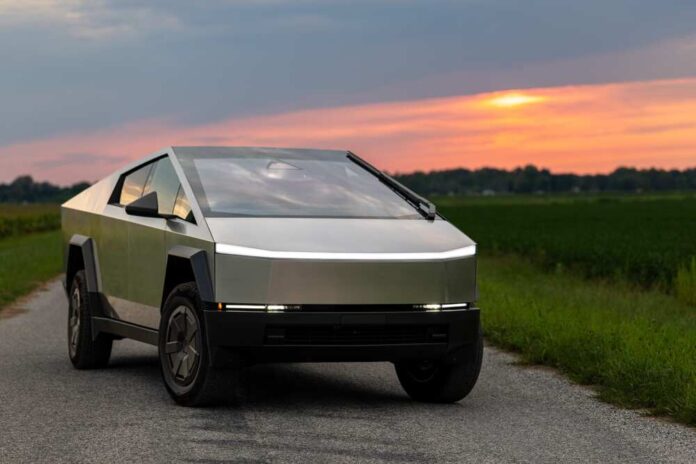
The Las Vegas Metropolitan Police Department has officially deployed the nation’s largest fleet of Tesla Cybertrucks for active patrol duty, marking a revolutionary shift in American law enforcement technology funded entirely through private donations.
Story Highlights
- Ten Tesla Cybertrucks, including a specialized SWAT armored vehicle, now patrol the streets of Las Vegas.
- $8-9 million fleet funded by private donation from Ben and Felicia Horowitz, not taxpayer money.
- First and largest deployment of police Cybertrucks in United States history.
- Vehicles equipped for tactical response and critical incident management.
Private Funding Enables Police Innovation Without Taxpayer Burden
The Las Vegas Metropolitan Police Department’s Cybertruck fleet represents exactly the kind of public-private partnership that conservatives have long championed.
Instead of forcing taxpayers to fund experimental police technology, tech industry philanthropists Ben and Felicia Horowitz stepped forward with an $8-9 million donation to make this initiative possible.
This approach demonstrates how private sector innovation and charitable giving can advance public safety without expanding government spending or creating additional tax burdens on hardworking American families.
Sheriff Kevin McMahill described the deployment as “the next evolution in keeping our community safer,” emphasizing the vehicles’ advanced capabilities for officer protection and tactical response.
The fleet includes ten standard patrol Cybertrucks distributed across area commands plus one heavily armored SWAT vehicle designed for critical incident response. This represents a significant upgrade in officer safety equipment, particularly important given the dangerous environments law enforcement faces in today’s America.
Operational Advantages Address Real Law Enforcement Needs
The Cybertruck’s design specifications align perfectly with modern policing requirements. The vehicles offer superior durability, extended range, and substantial cargo capacity for equipment storage. These practical advantages matter more than political symbolism when officers face life-threatening situations.
The electric drivetrain also eliminates fuel costs and reduces maintenance expenses, creating long-term savings that benefit taxpayers even though the initial purchase was privately funded.
Las Vegas presents unique challenges for law enforcement with its high tourist volume, large-scale events, and complex urban environment. The Cybertruck fleet provides officers with reliable, high-performance vehicles capable of handling everything from routine patrol to emergency response situations.
The vehicles’ advanced technology systems integrate with existing police communication and surveillance equipment, enhancing overall operational effectiveness without compromising established procedures.
The new Las Vegas Metro Police Cybertruck fleet features AI-powered real-time data analysis and "predictive policing" technology that can "forecast crime hotspots" and optimize patrol routes. We expect crime on Boulder Highway to drop by 50%. pic.twitter.com/OvmSeLvPdZ
— Las Vegas Locally 🌴 (@LasVegasLocally) October 29, 2025
Setting National Precedent for Police Fleet Modernization
Other police departments nationwide have experimented with electric vehicles, typically using Tesla Model 3 and Model Y platforms for patrol duties. However, Las Vegas represents the first large-scale deployment of purpose-built tactical electric vehicles designed specifically for law enforcement applications.
This initiative positions American police departments ahead of international competitors in adopting next-generation technology while maintaining focus on public safety rather than environmental virtue signaling.
The deployment timeline demonstrates efficient project management, with vehicles delivered in September 2025 and full operational status achieved by October 28, 2025.
Unplugged Performance, through its UP.FIT division, handled vehicle modifications and deployment logistics, showcasing American private sector capability to support law enforcement innovation.
This partnership model proves that effective public safety improvements don’t require massive government bureaucracy or extended procurement processes.
Practical Innovation Over Political Theater
Critics might dismiss this initiative as expensive technological showboating, but the facts suggest otherwise. The vehicles serve genuine operational needs while demonstrating American technological leadership.
The private funding model eliminates legitimate taxpayer concerns about experimental spending, while the enhanced officer protection capabilities address real safety issues facing law enforcement personnel.
This represents smart innovation that strengthens police effectiveness rather than pursuing trendy environmental policies at the expense of public safety.
The success of Las Vegas’s Cybertruck deployment will likely influence police departments across the country as they evaluate fleet modernization options.
However, the key lesson isn’t necessarily about electric vehicles specifically, but rather about leveraging private sector partnerships to advance public safety without burdening taxpayers. This model deserves replication in other areas where government efficiency lags behind private sector innovation.