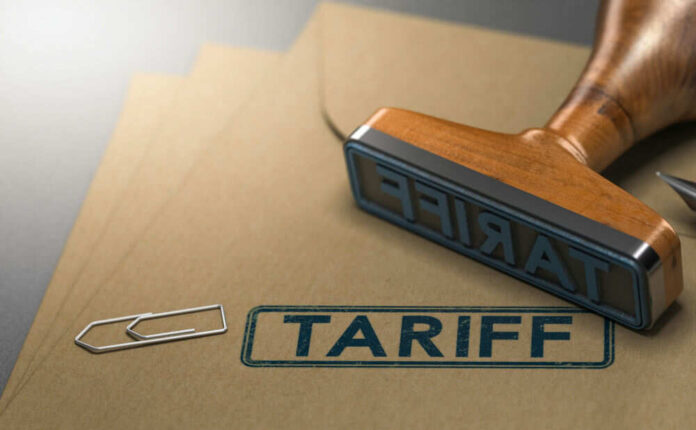
President Trump’s bold move to impose steep tariffs on imported trucks and buses marks a decisive stand against foreign competition, signaling a new era of economic nationalism and renewed protection of American industry.
Story Highlights
- Trump administration enacts 25% tariffs on imported trucks and parts, and 10% on buses, citing national security.
- Tariffs target non-USMCA imports, aiming to strengthen domestic manufacturing and supply chains.
- USMCA-compliant vehicles and parts receive preferential or exempted treatment under the new rules.
- Industry groups express concern over potential cost increases and supply disruptions as tariffs take effect.
Trump’s Tariffs: A Direct Response to Foreign Dependence
President Donald J. Trump signed a proclamation under Section 232 of the Trade Expansion Act of 1962, imposing a 25% tariff on imported medium- and heavy-duty trucks and parts, and a 10% tariff on imported buses.
The administration cited national security as the driving factor, arguing that excessive reliance on foreign manufacturers weakens the backbone of America’s supply chain and threatens military readiness.
Tariffs take effect on November 1, 2025, with USMCA-compliant vehicles and parts benefiting from exemptions or preferential treatment.
The decision follows a comprehensive investigation by the Secretary of Commerce, which concluded that imports—especially from countries like Mexico—now represent approximately 43% of trucks sold in the United States.
This surge, driven by decades of offshoring and foreign industrial policies, has undermined America’s manufacturing self-sufficiency, a vulnerability exposed further by pandemic-era supply chain disruptions.
The administration’s action is paired with an extension of production credits for U.S. automakers through 2030, designed to further incentivize domestic investment and job growth.
Section 232: Rarely Used National Security Authority
Section 232 of the Trade Expansion Act empowers the president to restrict imports deemed a threat to national security. Prior to this latest move, the provision was used sparingly—most notably by Trump in his first term to impose steel and aluminum tariffs.
By invoking Section 232 again, the administration draws a clear line: essential industries, like truck and bus manufacturing, must remain robust and domestically controlled to secure America’s future.
This stance resonates with those concerned about the erosion of U.S. sovereignty and economic independence under previous globalist, left-leaning policies.
For decades, American manufacturers have struggled against unfair foreign competition, with critical vehicle components increasingly sourced from overseas.
The Trump administration’s decisive action seeks to reverse this trend, prioritizing the strength of the U.S. industrial base and safeguarding the nation’s supply lines for goods vital to emergency response and military operations.
Stakeholders and Immediate Industry Impact
The most significant beneficiaries of these tariffs are U.S. truck and bus manufacturers, who gain much-needed relief from the flood of foreign competition. Automakers benefit from extended production credits, easing the transition and maintaining cost competitiveness.
Meanwhile, foreign exporters—especially those outside the USMCA region—face new barriers to accessing the American market. U.S. Customs and Border Protection is tasked with enforcement, while regulatory processes for determining non-U.S. content in vehicle parts are still being finalized.
Industry groups have voiced concern over the potential for higher prices and supply chain disruptions as they adjust sourcing strategies. Logistics, construction, and public transit sectors could see increased costs, but the administration maintains that long-term gains in security and domestic job creation outweigh these short-term challenges.
The tariffs are expected to accelerate efforts to reshore manufacturing and localize supply chains, further reducing America’s exposure to foreign shocks and policy changes.
Broader Economic and Political Implications
The tariffs’ immediate effect will be felt as increased costs for imported trucks, buses, and parts, with potential for higher consumer prices across related industries.
In the long run, the administration anticipates a revitalized domestic manufacturing sector and a reduction in foreign dependency. However, there is a risk of retaliatory measures from affected trading partners, especially Mexico, which could lead to broader trade tensions and diplomatic negotiations.
Trump signs proclamation imposing tariffs on truck and bus imports https://t.co/QEFXcpYvuF
— DailySprint (@DailySprint) October 18, 2025
Supporters of the proclamation argue that it is a necessary step to restore American greatness, uphold national security, and protect the livelihoods of American workers. Critics warn of higher costs, supply disruptions, and the possibility of a trade war that could impact international relations.
Despite these debates, the Trump administration’s official rationale is grounded in the need for economic resilience and the defense of industries that form the backbone of the nation’s security and prosperity.
Expert Analysis and Ongoing Developments
Industry analysts are divided: some believe the tariffs provide essential support to U.S. manufacturers and ensure long-term supply chain security, while others caution about the potential for significant downstream impacts and retaliation.
Trade economists highlight the controversial nature of Section 232 and question the effectiveness of tariffs in achieving lasting competitiveness. National security experts continue to debate the legitimacy of using security justifications for economic protectionism.
As the regulatory process unfolds and the industry adapts, close monitoring will reveal whether these bold measures will deliver the intended revival of American manufacturing or trigger new economic headwinds.