One man’s lifelong, self-funded search forced officials to acknowledge that the Hiroshima blast didn’t just kill civilians—it also incinerated 12 forgotten American POWs whose families were left in the dark for decades.
Story Snapshot
- Shigeaki Mori, a Hiroshima atomic bomb survivor and historian, has died at age 88; sources do not provide a confirmed public death date.
- Mori survived the Aug. 6, 1945, bombing as an 8-year-old about 2–2.5 km from ground zero, after being thrown into a river by the blast.
- Over roughly 30–40 years, he investigated the deaths of 12 American POWs held near the hypocenter and worked to get their names officially recognized.
- His persistence helped secure the POWs’ inclusion in Hiroshima Peace Memorial Hall’s victim registry and led to the city’s only memorial specifically for those POWs.
- Mori’s work drew international attention, including a 2016 moment when President Barack Obama met and embraced him during Obama’s visit to Hiroshima.
A Survivor’s Life Shaped by the Morning Hiroshima Went Dark
Shigeaki Mori was born on March 29, 1937, in Hiroshima and was eight years old when the atomic bomb detonated on Aug. 6, 1945. Accounts describe him walking across a bridge on the way to school, roughly 2 to 2.5 kilometers from ground zero, when the blast hit, throwing him and other children into shallow water.
Mori survived, but a companion did not, and he later described moving through darkness beneath the mushroom cloud amid fires, bodies, and shattered neighborhoods.
Shigeaki Mori, the hibakusha survivor of the August 1945 U.S. atomic bombing of Hiroshima who was embraced by then-U.S. President Barack Obama in 2016, died Saturday at the age of 88. https://t.co/cUO49mQVBa
— The Japan Times (@japantimes) March 17, 2026
That childhood trauma became the anchor for a later life devoted not only to remembering Hiroshima’s dead, but also to correcting gaps in the historical record.
Mori is repeatedly described as a hibakusha—an atomic bomb survivor—who refused to let the story freeze into slogans or politics. Instead, he focused on documented names, specific places, and verifiable events, even when that work required digging through incomplete archives and confronting uncomfortable realities on both sides of the Pacific.
How Mori Uncovered the 12 American POWs Lost in the Blast
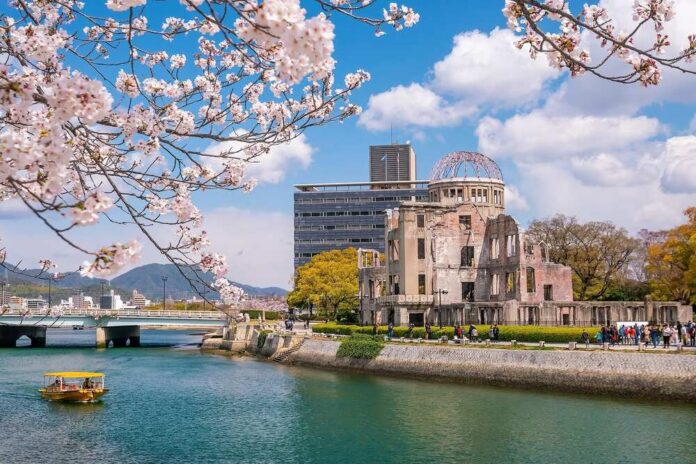
Mori’s defining historical contribution centered on 12 American prisoners of war who were being held at the Chugoku Military Police Headquarters, a site described as about 400 meters from the hypocenter. Because interrogation records and other documents were destroyed in the bombing, the POWs’ final hours were difficult to reconstruct.
Mori relied on surviving government documents, eyewitness accounts, U.S. archives, and painstaking cross-checking to identify the men and confirm their deaths in the atomic blast.
Several sources describe Mori’s work stretching across three to four decades. This timeline matters because it shows how institutional memory can fail without persistent citizens forcing facts back into view.
Reports also note the personal costs: he self-financed research, ran up phone bills contacting U.S. directories, and pursued leads long after the story’s news value had faded. The result was a clearer accounting of who died and where, turning a vague wartime footnote into a list of real people with families.
Recognition Fought for, Not Handed Down by Institutions
Mori’s research did not automatically translate into official recognition. According to reporting summarized in the research, Hiroshima Peace Memorial Hall authorities initially resisted adding the 12 POWs to the official bomb victim register.
Mori overcame that barrier by locating families and securing the documentation needed for inclusion. That effort mattered beyond symbolism: victim registries shape what the public learns, what museums present, and what future generations accept as settled history.
He also worked to establish what is described as Hiroshima’s only memorial dedicated to the American POWs killed by the bomb, and he authored a book in Japanese titled A Secret History of U.S. Soldiers Killed by the Atomic Bomb.
From a conservative, common-sense viewpoint, the practical lesson is straightforward: when government bodies act as gatekeepers of memory, citizens who do the hard work of documentation can still force the record to reflect reality—without rewriting it to fit fashionable narratives.
The 2016 Obama Moment—and What It Actually Proved
Mori became widely known in the United States after then-President Barack Obama visited Hiroshima on May 27, 2016, the first sitting U.S. president to do so.
Sources describe Obama requesting Mori’s presence, publicly acknowledging his work, and embracing him—an image later used as shorthand for reconciliation.
The historical substance, though, was less about optics and more about the underlying facts: Mori had already found the families, established identities, and pressed for official recognition before the cameras arrived.
In 2026, with American politics still defined by distrust of elite institutions, Mori’s story offers a rare example where humility and factual persistence cut through bureaucracy.
It also highlights a limitation in currently available reporting: while the research states Mori died at 88, multiple sources summarized here do not provide a specific death date or detailed circumstances.
Readers should treat the “dies at 88” framing as broadly consistent across the available materials, but not fully timestamped by the cited background sources alone.
BREAKING: Shigeaki Mori, Hiroshima atomic bomb survivor and historian, dies at 88. Mori was a Japanese atomic bomb survivor.
— PopOff News (@PopOffNews) March 17, 2026
Mori’s legacy ultimately rests on a simple principle many Americans still recognize as patriotic. Every life has a name, every family deserves the truth, and history should not be managed like a political project.
By documenting American POW deaths inside one of the most studied events of the 20th century, he demonstrated how easily inconvenient facts can fall through the cracks—and how one determined person can put them back where they belong, on the public record.
Sources:
Why This Hiroshima Survivor Dedicated His Life to Searching for the Families of 12 American POWs
Hiroshima historian returns fragments of shot down