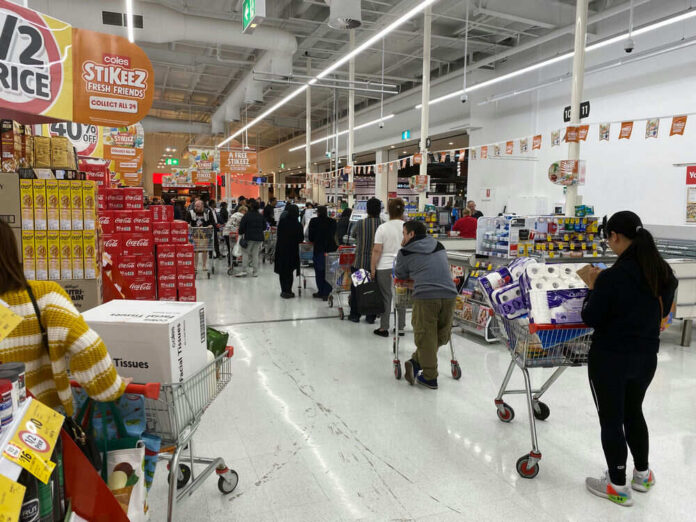
The real shock of your Memorial Day cookout this year will not be the grill flare-up, but the grocery bill that looks more like a car payment than a picnic.
Story Snapshot
- Hosting eight people for a basic Memorial Day cookout now runs about $60 to $85 just for food and drinks, depending on where you live.
- Roughly half of American adults say grocery costs are a major source of stress, and most have changed how they shop because of it.
- Some staples like ground beef are sharply higher, while eggs and potatoes have dropped, creating a strange “patchwork” inflation at the grill.
- Smart substitutions and a few common-sense moves can cut your cookout cost without turning the holiday into a lecture on economics.
What A Memorial Day Cookout Really Costs In 2026
A Memorial Day cookout for eight people now averages about $68 for food and drinks nationwide, or roughly $8.50 per person.[1] That is only the grocery basket: burgers, dogs, buns, sides, drinks. Add fuel, paper plates, cups, ice, and starter fluid, and the total often jumps another $10 to $25 depending on whether you already own a grill and have propane or charcoal on hand.[1] For many families, one afternoon of remembrance and hot dogs is creeping toward a hundred-dollar decision.
The pain is not evenly spread. In Miami or Tampa, that same cookout basket runs about $84.50 for eight guests, close to $11 per person, before you buy a single bag of ice.[1] Meanwhile, Indianapolis families can throw essentially the same gathering for around $58.90, roughly $7.35 per person.[1] Large Midwestern metros such as Chicago, Houston, and Dallas still squeak in under $65.[1] Geography, freight, and local competition now show up right on the picnic table.
Hosting a Memorial Day cookout? Here's how much it could cost https://t.co/F0v4l16yYp
— FOX Business (@FoxBusiness) May 22, 2026
Why This One Afternoon Hits So Many Nerves
About half of American adults now say grocery costs are a major source of stress in their lives, and only a small minority report no stress from food prices at all.[3] Pew Research Center finds that 62 percent say food prices are extremely or very important when deciding what to buy. That is not theoretical economics; that is people standing in front of the meat case, scanning price tags, and quietly redoing the guest list or the menu in their head.
LendingTree reports that 49 percent of Americans say it is at least somewhat difficult to afford food, and 86 percent have changed how they shop for groceries.[1] Those changes are not about experimenting with exotic ingredients. People are buying more store brands, cutting “splurge” items, and paying closer attention to waste and leftovers.[1] In plain language, many households are pressing every button they can before they touch the ultimate sacred cow: feeding fewer people or serving noticeably less.
The Strange New Price Map Of Your Grill
Government data shows that food-at-home prices are up about 28 percent since January 2020, and still roughly 2 percent higher than a year ago. That long, grinding climb explains why your mental picture of what burgers “should cost” is stuck somewhere in 2019. Month to month, inflation looks modest, but the base you are inflating from is already elevated. From a common-sense standpoint, you feel the compounding because your pay raises, if you get them, rarely arrive in tidy, matching increments.
The price action inside your basket is uneven. Network and cable segments covering Memorial Day pricing point out that ground beef is up around 15 percent over the past year, while chicken has stayed roughly flat or dipped slightly.[2][4] Tomatoes have spiked dramatically, while potatoes and eggs have fallen, with eggs down by more than half from their bird-flu peak.[2]
Cheese presents its own split personality: cheddar modestly higher, processed slices somewhat lower.[2] The result is a picnic where the burger patty feels luxurious and the egg salad feels like an unexpected bargain.
Tariffs, Gas, And The Politics Lurking Behind The Cooler
Headlines this spring have hammered home one message: tariffs and fuel prices are quietly riding shotgun to your grocery bill. Reporters point to new or higher tariffs on a wide range of imports, from coffee to shrimp and certain meats, as key reasons wholesalers and grocers face higher costs on summer staples.[4] A grocery chain chief recently described how tariffs on bananas and shrimp are forcing buyers to juggle sourcing countries and decide whether to swallow costs or pass them along at the register.
🚨 $8 for a dozen eggs — billionaire Ken Griffin calls inflation 'deeply triggering' for Americans
Despite CPI cooling, real grocery prices stay elevated, squeezing household budgets and consumer confidence.
Rate cuts while Main Street still bleeds? #Inflation #Fed #Economy pic.twitter.com/Z3rZkqmmun
— The Signal 📡 (@signal_daily_) May 24, 2026
Gas prices, while lower than some previous Memorial Day weekends, still matter.[3] Every pound of ground beef and every case of beer has already burned fuel in trucks before it reaches your store. American instincts are right to be skeptical of any politician calling affordability concerns a “hoax.” When half the country tells pollsters groceries are a major stress point, the proper response is less spin and more restraint in policy experiments that pile avoidable costs onto family basics.[3]
How To Host Smart Without Killing The Mood
Households are already responding the way wise grandparents would advise. Many shoppers now comparison-shop more aggressively, use coupons and loyalty programs, and look at unit prices on shelf tags rather than trusting the big print.[1] People skip pre-cut fruit, bagged salads, and fancy branded sides in favor of raw ingredients and store brands. That kind of thrift used to be considered normal adult responsibility; elevated grocery prices have simply shoved those habits back to center stage.
A Memorial Day host who wants to honor both fallen service members and the family budget can lean into that mindset. Choosing chicken thighs or drumsticks instead of all-beef burgers, dialing back on pricey toppings like tomatoes, and building the table around lower-cost winners like potatoes and eggs can shave meaningful dollars without cheapening the gathering.[2] Asking guests to bring a side or dessert turns the event from “expensive performance” into “shared remembrance,” which is closer to the holiday’s roots anyway.
Sources:
[1] Web – Half of Americans Struggle to Afford Food | LendingTree
[2] YouTube – Grocery prices stress Americans, poll shows rising worry
[3] Web – The vast majority of US adults are stressed about grocery costs, an …
[4] Web – Stopping Sticker Shock at the Grocery Store: A Plan To Make Food …