

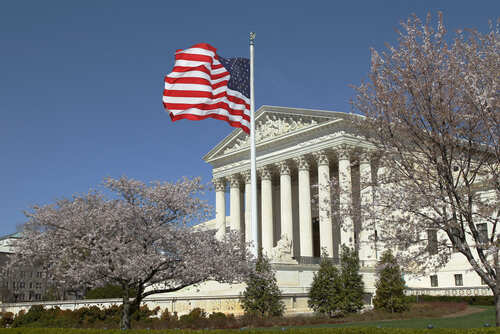
When the Supreme Court quietly killed Virginia’s new congressional map in a single sentence, it exposed a brutal truth about American democracy: process can erase millions of votes with the stroke of a pen.
Story Snapshot
- Virginia voters approved a constitutional amendment paving the way for a new congressional map favoring Democrats.
- The Virginia Supreme Court struck the amendment down on procedural grounds tied to early voting and legislative timing.
- Virginia Democrats begged the United States Supreme Court to step in, claiming voters’ will was nullified; the justices refused.
- The fight reveals a deeper clash between “respect the vote” rhetoric and the hard guardrails of constitutional procedure.
How Virginia Voters Approved A Map That Never Had A Future
Virginia’s story starts the way civic textbooks say it should: more than three million citizens went to the polls and a majority approved a constitutional amendment that authorized new congressional districts. Supporters marketed the plan as a way to counter Republican redistricting gains in states such as Texas, Missouri, North Carolina, Ohio, and Florida, where new maps had boosted Republican prospects in the House of Representatives.[3] On paper, this was democracy with both hands on the wheel.
Behind the scenes, Democratic strategists knew exactly what this “reform” would do. The voter-approved map was drawn to flip as many as four Republican-held seats into the Democratic column in a closely divided House.[2][3] That is not speculation; major outlets described the plan as explicitly intended to give Democrats more seats and blunt Republican momentum.[2][3] Voters were not merely cleaning up gerrymandering; they were asked to endorse a new partisan weapon, and many said yes.
Why The Virginia Supreme Court Said “No” Anyway
The Virginia Supreme Court looked at the same story and focused on something far less glamorous than partisan advantage: the state constitution’s rules for how and when you may put an amendment in front of voters. In a 4–3 decision, the court held that the General Assembly failed to follow the required process, including a timing rule that became fatal once early voting had already begun.[2][3][4] That defect, the majority concluded, made the referendum vote legally meaningless.
Reporting on the ruling notes that the court declared the violation “irreparably” undermined the referendum’s integrity and rendered the amendment “null and void.”[4] That is nuclear language in election law. The court effectively said, “You cannot break the rules to ask the question, then hide behind the answer.” From a rule-of-law perspective, that is hard to dismiss. Written constitutions are supposed to bind politicians precisely when it is inconvenient to do so.
Democrats’ Argument: Millions Of Votes Versus A Technicality
Democratic officials in Virginia pushed back hard. Attorney General Jay Jones, House Speaker Don Scott, Senate Majority Leader Scott Surovell, and Senate President Pro Tempore L. Louise Lucas raced to the United States Supreme Court, claiming the state court had “overstepped its authority and nullified the votes of millions of Virginians.”[1] Their central message: voters were told this was lawful, they approved it, and unelected judges had no business yanking it away after the fact.
Their legal hook targeted how the Virginia Supreme Court understood federal Election Day statutes. Democrats argued that, under federal law, an election happens on Election Day, even if early voting occurs beforehand.[1] According to this view, treating early voting as part of the “general election” itself twisted federal precedent and turned a routine calendar issue into an excuse to shred a democratic mandate. From a political standpoint, this is potent rhetoric, especially in an era when both parties claim to be defending voting rights.
What The United States Supreme Court Actually Did—And Did Not—Say
The United States Supreme Court’s response barely filled a page. In an unsigned, one-sentence order, the justices refused to block the Virginia Supreme Court’s decision, leaving the old 2021 lines in place for upcoming elections.[2] No justice noted a dissent.[2][1] That silence speaks volumes about the Court’s current posture: it rarely intervenes in state-law redistricting fights unless a clear federal issue demands it, and this case did not clear that bar.
BREAKING: The Supreme Court rejects Virginia's bid to restore a congressional map favoring Democrats. https://t.co/WrcexMohCv
— The Associated Press (@AP) May 15, 2026
Here is what that denial does not do. It does not bless the Virginia Supreme Court’s interpretation as the only plausible reading of state law. It does not decide whether early voting should count as part of the “election” for constitutional timing purposes. It simply says the federal justices will not rescue a map whose most obvious problem lies in the state constitution, not in Washington. For those who prize federalism, that restraint tracks long-standing principles about state sovereignty over their own election rules.
The Deeper Lesson: Process Is The Last Honest Referee
Strip away the partisan jerseys and this case becomes uncomfortably clarifying. Democrats championed a map that openly favored their side, justified it by pointing to Republican hardball in other states, and then cried disenfranchisement when their own state’s constitutional rules got in the way.[3][1] Republicans, who have also embraced aggressive line-drawing when it benefits them, suddenly sounded like good-government reformers insisting that constitutional procedures matter more than short-term wins.[3][5]
For citizens trying to make sense of it, the conservative common-sense takeaway is blunt: the country either lives by written rules or by raw power. If a legislature can bypass its own constitution’s safeguards the moment a clever map appears, then voters are not really in charge—political insiders are. Virginia’s saga is a reminder that real self-government depends less on heroic judges or viral outrage and more on something far less dramatic: following the rules even when it costs your team four seats in Congress.
Sources:
[1] Web – Supreme Court refuses to restore Virginia redistricting plan …
[2] Web – Supreme Court rejects Virginia Democrats’ bid to revive … – CBS News
[3] YouTube – Virginia Supreme Court strikes down gerrymandered redistricting plan
[4] Web – Supreme Court rejects bid to restore Virginia’s redistricting map …
[5] YouTube – Virginia Supreme Court strikes down Democrats’ redistricting plan