

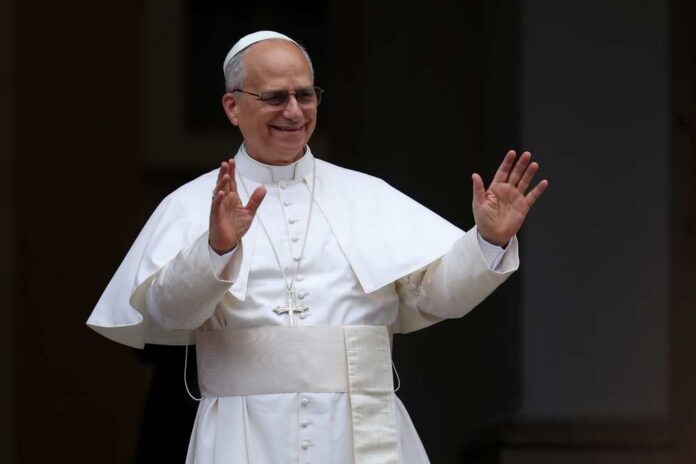
A pope just asked pardon “in the name of the Church” for helping legitimize slavery—while warning that our phones and algorithms are building new chains.
Story Snapshot
- Pope Leo XIV’s first encyclical, Magnifica Humanitas, includes the first explicit papal apology for the Vatican’s role in authorizing slavery.[1][3]
- He calls the Church’s delayed rejection of slavery “a wound in Christian memory” and asks pardon in the Church’s name.[1][3]
- The document points to 15th‑century papal decrees that empowered rulers to “reduce persons to perpetual slavery.”[1][3]
- Leo links that past to today’s tech economy and human trafficking, calling them “modern forms of slavery.”[1][3]
A pope apologizes not for Christians, but for the papacy itself
Pope Leo XIV did something his predecessors avoided: he named the Holy See’s own role in slavery and asked forgiveness specifically “in the name of the Church.”[1][3]
This did not come in an offhand remark on an airplane. It appears in his first encyclical, Magnifica Humanitas, the kind of formal letter popes use to set priorities for the global Church.[1][3] That choice of vehicle alone signals this is not mere public relations, but a line in the institutional record.
Reporters summarizing the encyclical say Leo describes the Vatican’s history with slavery as “a wound in Christian memory,” and admits the Church took “eighteen centuries” to fully recognize slavery’s incompatibility with Christian faith.[1][3]
That is an extraordinary concession from an institution that usually prefers the language of “development” over “delay.”
It is an admission that, for centuries, churchmen knew enough of the Gospel to do better but did not, which resonates deeply with conservative ideas about moral responsibility, even across time.
The bulls that blessed conquest and “perpetual slavery”
The apology does not float in abstraction. Leo’s encyclical, according to multiple outlets, points back to specific 15th‑century papal decrees that gave Portuguese rulers authority “to invade, conquer, fight and subjugate” non‑Christians and “reduce their persons to perpetual slavery.”[1][3]
Historians have long debated how directly these texts fueled the trans‑Atlantic slave trade, but there is no getting around the plain meaning of that phrase.[1][3] Leo effectively concedes that earlier popes helped sanctify what political power would have done anyway.
Those decrees later underpinned what came to be called the Doctrine of Discovery, the legal‑theological framework European empires used to justify seizing lands in Africa and the Americas from peoples labeled “infidels.”[1][3]
The Vatican formally repudiated that doctrine in 2023, but critics noted the statement ducked the bulls themselves. Leo’s apology addresses that gap: he does not merely say “Christians” did wrong; he acknowledges that past popes authorized rulers to enslave.[1][3] That is institutional, not just cultural, complicity.
From chains and galleys to cobalt and code
Leo folds all of this into a broader meditation on artificial intelligence, labor, and human dignity. The encyclical reportedly warns that unregulated technological systems and the global scramble for resources create “modern forms of slavery,” especially in mining and supply‑chain work that feeds our devices.[1][3]
He draws a line from royal charters to perpetual slavery, to today’s quiet exploitation of invisible workers who make the digital world possible. That linkage is shrewd: it keeps the apology from being a museum piece.
Pope Leo XIV Issues First-Ever Papal Apology for Vatican’s Role in Legitimizing Slaveryhttps://t.co/m3RVPWTEug#PopeLeoXIV #Vatican #CatholicChurch #Slavery #DoctrineOfDiscovery #ChurchHistory #HumanRights #TransAtlanticSlaveTrade #Christianity #Colonialism #PopeLeo #Catholic pic.twitter.com/lK5zRCP3v6
— The New Dispatch (@The_NewDispatch) May 27, 2026
For older readers who remember when a phone sat on the kitchen wall, the idea that your smartphone rests atop coerced labor feels uncomfortable yet familiar.
Every generation builds wealth on someone else’s back, then discovers, too late, that it looked a lot like the injustices they swore never to repeat.
Leo’s warning that tolerating human trafficking and abusive labor is to become “complicit” echoes an insight: you cannot outsource morality to systems and then wash your hands of outcomes.[3]
What an apology means—and what it does not
Leo’s move raises hard questions that both critics and defenders are already arguing about. On one side, activists welcome a clear, institutional confession: a pope explicitly acknowledges that papal decrees helped legitimize slavery and asks pardon in the Church’s name.[1][3]
On the other hand, skeptics see yet another grand apology for centuries‑old sins, with no obvious path to restitution or concrete reform. Social media voices on the right frame it as the Vatican apologizing for events “before anyone alive today was born,” and ask what purpose that serves.
No apology in 2026 can change 1452. But refusing to tell the truth about institutional failure only guarantees repeat performances, especially when new technologies tempt leaders to treat people as raw material.
From this standpoint, acknowledging that spiritual authorities once blessed slavery can actually strengthen the case for limited, accountable power. If popes could get slavery wrong, today’s technocrats can certainly get artificial intelligence and surveillance wrong.
Why this moment matters beyond Catholics
The Church has issued many regrets about “Christians’ involvement” in historic wrongs. Leo’s distinct move is to say, in effect, “Our own house wrote the permission slips.”[1][3]
That matters not only for Catholics but for anyone watching how old institutions confront their records. It demonstrates that long‑lived bodies can own their failures without self‑abolishing. That is the adult alternative to both whitewashing the past and endlessly weaponizing it for present‑day political theater.
There is an uncomfortable implication here for governments, universities, and corporations now issuing their own historical apologies. Leo’s encyclical quietly rebukes the temptation to blame only “participants” while sparing the rule‑makers.
If a pope can say that papal texts helped “regulate and legitimize” slavery, then modern elites can say clearly when their policies—on trade, drugs, war, or data—helped create new forms of bondage. The question after Magnifica Humanitas is whether anyone else will follow suit.
Sources:
[1] Web – Pope Leo XIV makes historic apology for Vatican’s role in legitimizing …
[3] Web – Pope Leo XIV apologizes for Catholic Church’s role in …