

A U.S.-born pope just turned up the heat on the Iran war—calling out “those responsible” and demanding a ceasefire as civilian deaths and regional spillover mount.
Quick Take
- Pope Leo XIV used his March 15 noon blessing to deliver his strongest appeal yet for an immediate ceasefire and renewed diplomacy.
- Without naming countries, he directly addressed “those responsible” for the conflict and referenced attacks that hit a school.
- Reporting describes the conflict as a U.S.-Israeli military operation against Iran that began about two weeks earlier.
- Vatican officials signaled opposition to “preventive war” framing while keeping diplomatic channels open with all sides.
Pope Leo XIV shifts from careful neutrality to direct pressure
Pope Leo XIV escalated his public messaging on Sunday, March 15, 2026, using his traditional noon blessing to appeal for an immediate ceasefire in the Iran conflict and to demand a reopening of diplomatic dialogue.
His wording was unusually direct by Vatican standards, addressing “those responsible for this conflict” while still avoiding explicit national blame. The shift matters because, as the first U.S. pope, he inevitably echoes in American politics.
Pope escalates call for ceasefire in Iran by addressing those responsible for the war https://t.co/u73m0bQmbi
— ABC13 Houston (@abc13houston) March 15, 2026
The reporting indicates the pope had spent the prior two weeks making muted appeals for dialogue, a posture consistent with long-standing Vatican diplomatic neutrality. That earlier restraint appeared designed to keep the Holy See from being cast as a political counterweight to President Donald Trump.
However, Sunday’s statement moved beyond general pleas and into moral-accountability language. This approach can put pressure on the most powerful actors without breaking the Vatican’s tradition of careful phrasing.
What the Vatican is reacting to: civilian harm and a widening regional crisis
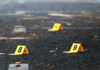
The research describes the conflict as a U.S.-Israeli military operation against Iran that began in early March 2026. A central humanitarian flashpoint cited in coverage was a strike on an elementary school in Minab, Iran, reported to have killed more than 165 people, many of them children.
U.S. officials attributed the strike to outdated intelligence and said an investigation was ongoing, but the material did not include any public final findings.
The Vatican highlighted the human cost in a striking way: L’Osservatore Romano published an aerial photograph of a mass grave for young victims under the headline “The Face of War.”
That editorial decision signals how seriously the Holy See views civilian casualties, especially involving children. The reporting also says the conflict is affecting Lebanon, with aid groups warning of a humanitarian crisis—an issue the Vatican watches closely because of vulnerable Christian communities in the region.
Inside the Vatican: diplomacy with everyone, criticism of “preventive war”
Senior Vatican figures reinforced that the Holy See intends to keep lines open even while condemning violence. Cardinal Pietro Parolin, the Vatican Secretary of State, said the Holy See “speaks with everyone” and, when needed, speaks with Americans and Israelis to present what it considers solutions.
That approach is consistent with Vatican diplomacy: staying in contact with all parties to preserve leverage for humanitarian access, dialogue, and de-escalation.
At the same time, the research notes sharper moral language from prominent U.S. cardinals. Cardinal Robert McElroy, Archbishop of Washington, characterized the war as “morally unjustifiable,” a direct condemnation that goes further than the pope’s careful non-naming approach.
Cardinal Parolin’s rejection of describing the conflict as “preventive war” also matters because it implies the Vatican does not accept that label as sufficient justification, at least in the way officials have discussed it publicly.
Why this matters to Americans: moral authority vs. political narratives
For Americans watching from home—especially those tired of propaganda, institutional spin, and foreign-policy messaging games—this story is a reminder that major moral voices can complicate official narratives.
The pope’s appeal emphasized that “violence can never lead to the justice, stability, and peace that the people are waiting for,” and he pointed to “attacks that targeted a school” without assigning blame in his remarks. That caution limits certainty about specific culpability based solely on his wording.
The report also mentions Cardinal Blase Cupich criticizing the White House’s social media strategy, suggesting internal Church concern about how the conflict is framed for domestic audiences.
Still, the available sources do not include responses from U.S., Israeli, or Iranian leadership to the pope’s escalation, leaving a key gap for readers trying to judge real-world impact.
What is clear is that the Vatican is emphasizing the humanitarian angle and urging de-escalation before the region further destabilizes.
As this develops, the most grounded takeaway from the research is narrow but important: the pope’s tone has changed, the Vatican is publicly centering civilian harm, and Church leaders are debating how forcefully to confront powerful governments while still keeping diplomacy alive.
With no ceasefire reported in the provided materials, the immediate question is whether moral pressure—paired with behind-the-scenes talks—can slow a conflict that is already spilling into neighboring countries and threatening fragile minority communities.
Sources:
Pope escalates call for ceasefire in Iran by addressing those responsible for the war
Pope escalates call for ceasefire in Iran by addressing those responsible war
Pope Leo appeal ceasefire dialogue middle east iran us israel