

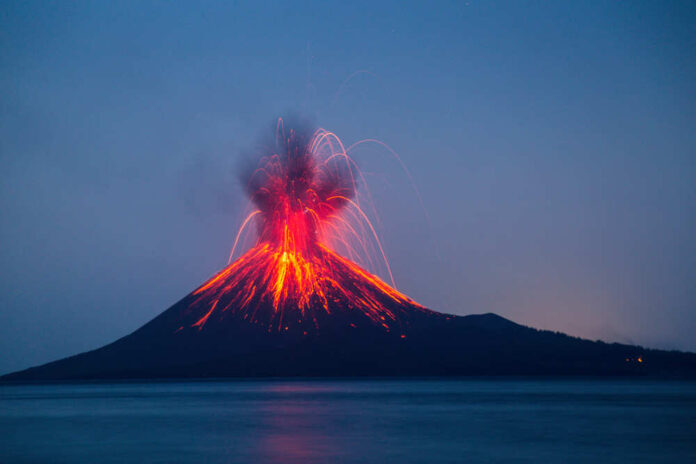
In a volcano chaos, a colossal eruption of Indonesia’s Mount Lewotobi Laki Laki has sent an enormous ash plume soaring 11 miles high, causing severe disruptions in air travel.
See the video below!
Though the area is still reeling from this natural disaster, proactive measures by local authorities have prevented casualties.
This event raises crucial questions about the preparedness for future volcanic activities in this volatile region.
Mount Lewotobi Laki Laki erupted on July 7, 2025, casting a dense ash cloud 11 miles into the sky, affecting the surrounding environment significantly.
Indonesia’s Geology Agency swiftly issued warnings about the potential for hazardous lava flows, recommending that residents remain at least 4.3 miles from the eruption center.
Drones captured images of lava filling the crater, indicating deep magma movement and ongoing volcanic earthquakes, underscoring the need for heightened vigilance.
The eruption’s impact on air travel has been substantial, with affected routes across Bali and connections to Australia, Singapore, and South Korea seeing systematic cancellations.
Australia’s VAAC Darwin responded by issuing a red aviation warning, highlighting the 12-mile high ash plume moving west at a staggering 30 knots.
This decision reflects the magnitude of risk the aviation industry faces when dealing with volcanic plumes.
The dire effects of the eruption extend beyond air travel disruptions.
Volcanic ash blanketed nearby villages, turning day into night for nearly half an hour and forcing emergency services to advise residents to wear masks to protect against harmful inhalation.
An avalanche of gas clouds, rocks, and lava traveled up to 3 miles down the volcano’s slopes, emphasizing the destructive power of nature.
With no casualties reported, largely due to the rapid response by local authorities who had already raised the volcano’s alert status to its peak following previous eruptions, efforts to maintain this record require constant monitoring and assessment of the situation.
As authorities evaluate the dangers, the community and visitors are reminded of the unpredictable nature of active volcanoes.
The eruption serves as another reminder of Indonesia’s geographical position along the volatile “Ring of Fire,” where 120 active volcanoes exist.
Events such as this necessitate urgent discourse on international cooperation and preparedness strategies, as the ash plume certainly carries a greater danger, impacting not just the immediate vicinity but the wider global community.
The July 2025 eruption of Mount Lewotobi Laki Laki exemplifies nature’s incredible force and its capacity to disrupt human activity on a massive scale.
As this situation unfolds, the urgency for comprehensive emergency strategies and international aviation guidelines becomes ever more clear, reminding us of the critical need to respect and prepare for nature’s unpredictability.