

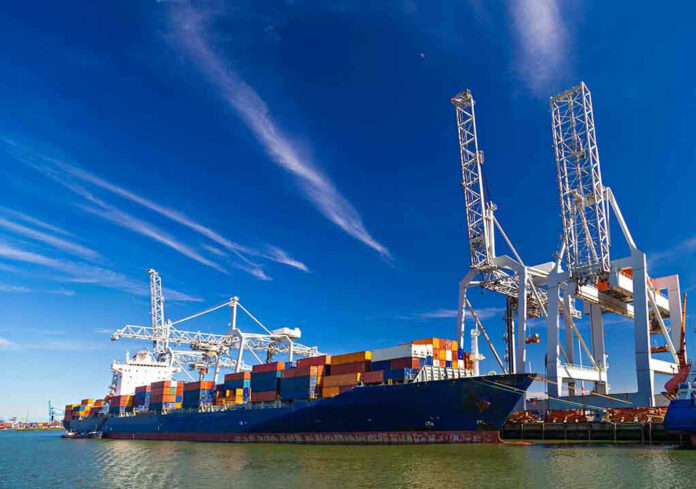
The United States just turned a quiet ceasefire into a roaring wake‑up call after Iran hit three ships in the Strait of Hormuz.
Story Snapshot
- U.S. Central Command says it launched “powerful strikes” after Iran attacked three commercial vessels.
- Earlier June strikes already hit Iranian missile, drone, radar, and air defense sites over ship attacks.
- Iran denies clear blame, calls the U.S. a treaty‑breaking regime, and fires back at U.S. sites in the Gulf.
- Oil markets jump and the fragile ceasefire deal hangs by a thread as both sides trade blows.
U.S. strikes framed as a powerful response to ship attacks
U.S. Central Command said American forces began “a series of powerful strikes” against Iran after three commercial vessels were attacked while crossing the Strait of Hormuz. Commanders described the move as a way to “impose heavy costs” on Iran for targeting ships crewed by civilians in what the U.S. calls an international waterway.
Officials argue these strikes are not optional muscle‑flexing but a necessary answer to what they see as direct, dangerous aggression that breaks the ceasefire deal.
Central Command already labeled similar June strikes as a “powerful response” when an Iranian drone hit the Singapore‑flagged cargo ship Ever Lovely on June 25.
That attack came as the ship exited the strait along the Omani coast on a route that British maritime authorities said matched recommended guidance, pushing back on Iran’s claim the vessel used an unauthorized path. From an American view, going after civilian shipping in a key trade lane looks less like “coastal control” and more like coercion that must meet firm resistance.
Targets show a clear intent to weaken Iran’s strike capability
Central Command reports that U.S. aircraft hit Iranian missile and drone storage sites and coastal radar systems around the strait in June. Later actions expanded to air defenses, anti‑ship missile sites, communication systems, and minelayer capabilities inside southern Iran.
The newest wave reportedly struck more than 80 targets, including dozens of small boats the Revolutionary Guard uses to harass or attack tankers. This target set is tailored to one purpose: make it far harder for Iran to threaten shipping lanes again.
BREAKING: U.S. Central Command says American forces launched a new wave of strikes Tuesday, hitting more than 80 targets across Iran after Tehran’s latest attacks on commercial vessels in the Strait of Hormuz. The operation targeted Iranian air defenses, command-and-control… pic.twitter.com/cqiZ3wNsMt
— Breaking911 (@Breaking911) July 8, 2026
These strikes fit a wider pattern of low‑intensity maritime conflict that has run through the 2026 Iran war. Both sides trade blows and claim “retaliation,” but they avoid a clear, declared full‑scale war.
For Washington, focusing on missile sites, drones, and small craft sends a narrow message: you do not get to shut down a global energy lifeline any time you choose. For Iran’s leadership, however, every radar and boat destroyed feeds their story of an overbearing United States trying to strip them of regional control.
Iran pushes a competing story of control and victimhood
Iran insists it has the right to control traffic through the Strait of Hormuz and warns regional neighbors not to line up behind Washington’s position.
State media said a projectile hit the area around Sirik port, then claimed naval forces answered by striking U.S. targets nearby, without clear proof of damage. Iranian outlets and officials describe the United States as a “treaty‑breaking regime,” accusing Washington of violating the ceasefire and wider agreements meant to end the war.
Iran notably does not clearly admit attacking all three tankers, instead hinting that at least one ship ignored warnings and used the wrong route. That careful wording matters. American commanders say Iran’s Revolutionary Guard struck three oil tankers in just two days and call this “unwarranted aggression.”
Tehran’s story leans on legal control of the strait and murky claims of rule‑breaking ships. From a common‑sense lens, refusal to plainly admit the hits looks less like legal caution and more like an attempt to dodge responsibility while keeping leverage.
Ceasefire deal, global markets, and what happens next
The June memorandum of understanding to end the war and reopen the strait was supposed to cool tempers and restart trade. Instead, each fresh attack and counter‑strike turns that deal into paper that both sides wave when useful and ignore when angry.
Central Command calls Iran’s ship attacks a “clear violation” of the ceasefire. Iran’s foreign ministry answers that U.S. air raids and renewed oil sanctions have gutted key parts of the agreement.
Oil prices jumped after the latest strikes, highlighting how quickly this narrow waterway can shake global wallets. The United States revoked Iran’s ability to openly sell crude as part of the same pressure campaign.
Viewer polls on cable channels show strong support for hitting back at Iran, but raw anger does not replace hard evidence or a long‑term plan. For those who value peace through strength, the real test is whether these “powerful strikes” stop ship attacks without dragging America into another open‑ended Middle East war.
Sources:
cnbc.com, cbsnews.com, centcom.mil, reuters.com, youtube.com, bbc.com, facebook.com, en.wikipedia.org, crisisgroup.org, axios.com, cnn.com, instagram.com